"The biggest reason she decided to move forward was peace of mind. After receiving only a 40-day tourist permit on her last trip to Mexico, she was constantly worried about flying in and out, wondering if she'd be allowed back into the country or how much time she'd be given next. Now she never has to wonder again. 'I couldn't have done this without you, Dez. Thank you so much.'"
Who Actually Moves to Mexico City — and Why It Works
CDMX isn't for everyone. It's a sprawling, electric, world-class city that rewards people who want culture, convenience, and connection over a quiet beach retirement. If that's you, here's what you need to know.
Reliable fibre internet, coworking spaces in every neighbourhood, a thriving expat community, and a time zone that works for US and Canadian calls. Mexico City is consistently ranked one of the top three digital nomad destinations in the world.
World-class museums, James Beard-recognised restaurants, an extraordinary art and music scene, and architecture that spans centuries — all walkable from a leafy apartment in Roma or Condesa. If you want a big city life at a fraction of the price, CDMX delivers.
Mexico City has a strong selection of international schools (SEP-bilingual, British, American curricula), family-friendly neighbourhoods in Polanco, Lomas, and Del Valle, and a quality of life that's genuinely hard to match at this price point.
At 2,240 metres elevation, CDMX has a perfect spring-like climate year-round — no hurricane season, no extreme heat. Private hospitals rival US standards, grocery stores stock everything you need, and the cultural richness keeps life endlessly interesting.
Mexico City's Expat Neighbourhoods, Broken Down Honestly
The neighbourhood most people picture when they think of CDMX expat life. Beautiful art-deco buildings, leafy streets, excellent restaurants and coffee shops on every corner, and a strong sense of community. Roma Norte skews younger and busier; Roma Sur is slightly calmer. Rents run mid-range — you can find a one-bedroom from $900–$1,600 USD/month.
Right next to Roma, Condesa is more polished and slightly more expensive. Built around Parque México and Parque España — gorgeous for morning runs and weekend markets. Popular with established expats and creatives who want urban energy with a little more calm. Expect $1,100–$2,000+ for a well-located apartment.
Mexico City's most upscale neighbourhood — Presidente Masaryk, embassies, international schools, and private hospitals all within reach. Best for families or executives used to a certain standard. Highest rents in the city, but the lifestyle and security are unmatched. Expect $1,500–$3,500+ for a modern apartment.
Home of Frida Kahlo's Blue House, Coyoacán is a slower, more traditional neighbourhood in the south. Cobblestone streets, local markets, colonial plazas, and a strong arts community. Popular with people who want a more authentic Mexico experience. Rents noticeably lower — $700–$1,300 for a comfortable one-bedroom.
Large residential neighbourhoods that don't get the Instagram attention of Roma but are genuinely excellent to live in. Good metro access, supermarkets, international schools, local restaurants, and a quieter pace. Very popular with families and longer-term expats. One of the best bang-for-buck areas at $700–$1,200/month.
Mexico City's business district — glass towers, international companies, and newer high-rise apartments. Best for executives whose offices are in Santa Fe. More car-dependent than Roma or Condesa, and less character, but the apartments are modern and security is high. Worth considering if your work is here.
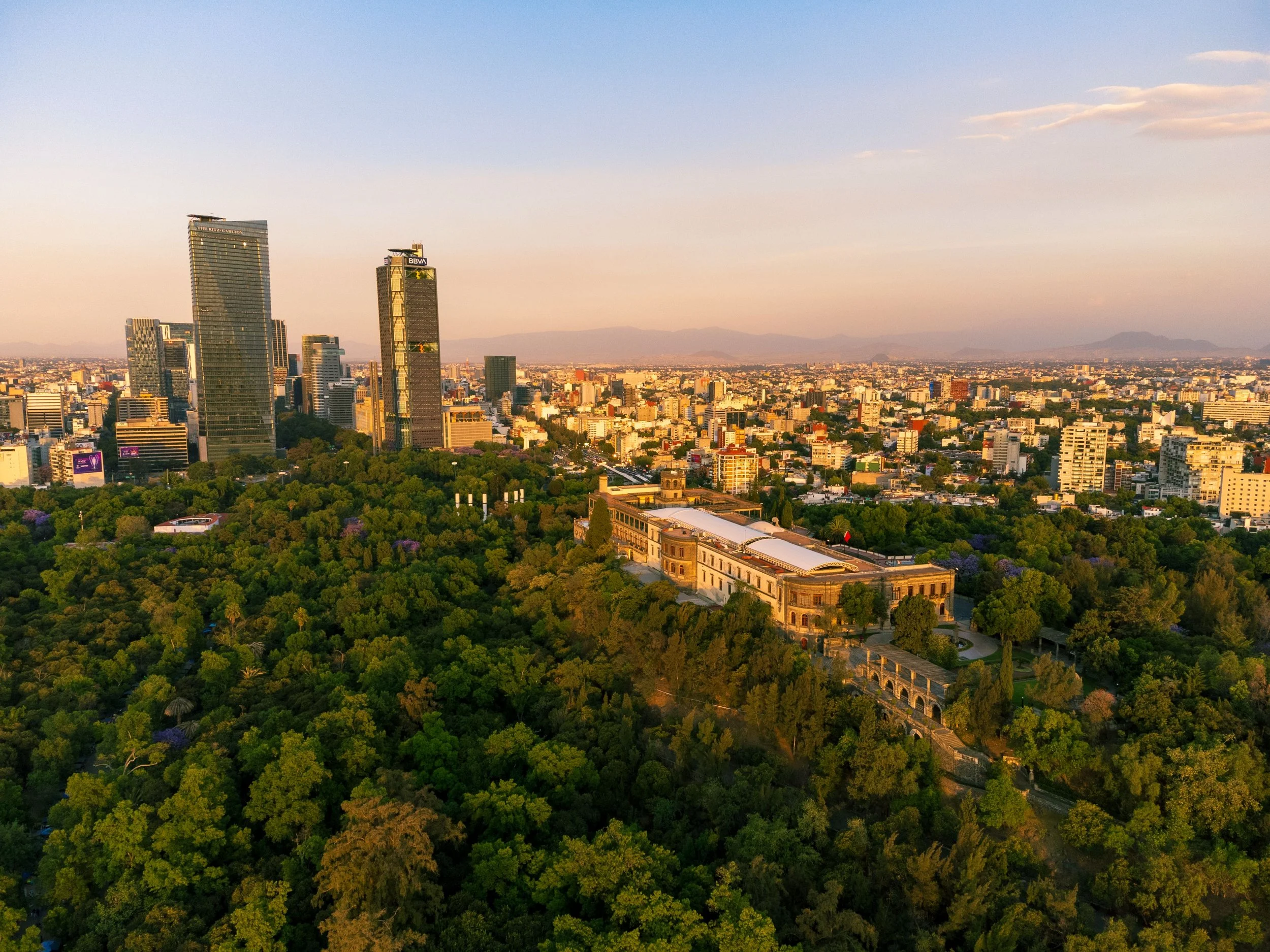
Breathtaking aerial view of Chapultepec Castle amidst lush greenery against the Mexico City skyline at sunset.
What Does Life in Mexico City Actually Cost?
CDMX is one of the most affordable world-class cities on the planet. These are realistic monthly estimates — not worst-case scenarios.
| Expense | Budget (Solo) | Mid-Range (Couple) | Comfortable (Couple+) |
|---|---|---|---|
| Rent (1–2 BR) | $700–$900 | $1,100–$1,600 | $1,800–$3,000+ |
| Groceries | $200–$300 | $350–$500 | $500–$700 |
| Dining out | $150–$250 | $300–$500 | $500–$900 |
| Utilities (electric, water, gas) | $40–$80 | $80–$150 | $150–$250 |
| Internet (fibre) | $25–$40 | $25–$40 | $40–$60 |
| Transport (Uber/Metro) | $50–$100 | $100–$200 | $200–$350 |
| Private health insurance | $80–$150 | $150–$300 | $300–$600 |
| Estimated Monthly Total | $1,245–$1,820 | $2,105–$3,290 | $3,490–$5,860 |
Before You Go: What You Should Know
Spring-like year-round at 2,240m altitude. Mild temperatures 15–25°C (59–77°F) most of the year. Rainy season June–October (afternoon showers only). No hurricanes, no extreme heat.
World-class private hospitals — Hospital Ángeles, ABC Medical Center, and Médica Sur rival US standards at a fraction of the price. Most expats use private health insurance ($80–$300/month).
Roma, Condesa, Polanco, Coyoacán, and Del Valle are safe for expats. Like any major city, neighbourhood selection matters. Most expats report feeling safer than they expected.
Fast, reliable fibre internet throughout expat neighbourhoods. Speeds of 100–300 Mbps are standard and cost $25–$40/month. Coworking spaces are abundant and excellent.
Spanish is the primary language. Expat-heavy neighbourhoods have more English speakers, but learning basic Spanish makes daily life significantly easier and richer.
Excellent Metro, extensive Metrobús network, and Uber is cheap and readily available. Most people in Roma, Condesa, and Coyoacán walk or bike. Owning a car is optional.
One of the largest expat communities in Latin America — Americans, Canadians, Europeans, and South Americans. Strong Facebook groups, international clubs, and events year-round.
Temporary Residency is the most common route for expats. You apply at a Mexican consulate in your home country. See our Residency Guide for a full walkthrough.
🔒 Concerned about safety? The Real Reason Mexico City Is Safer Than You Think →
🏠 Renting in Mexico City? Renting in Mexico City as a Foreigner: Why It's So Hard in 2026 →
Real People. Real Moves. Real Results.
"Dez helped me with my relocation from start to finish — it was a bit stressful for me, but she was there every step of the way! I'm so glad she was next to me during the whole process and still is if I have any questions. You are in good hands with Dez."
"Thank you, Dez. We couldn't have done it without your excellent advice and guidance. We truly appreciate you!"
"We have just completed our online Zoom consultation with Desaray and we just have to say... WOW! What a true professional. She answered questions that we didn't even think of. We look forward to her helping us through this whole process. All of the sudden this process seems so much easier!!"
"Dez is a transmuter. She turns chaotic, stressful, scary into clarity, simple, and exciting. You're in the best of hands with Dez!"
Introducing Our Relocation Packages
Relocating to Mexico is exciting, but it can also involve shifting timelines, evolving requirements, and independent third-party systems. Our structured relocation packages provide clear planning, coordinated implementation, and experienced guidance at every stage — from early research through full integration.
Essentials Experience
A structured starting point: foundational planning, private relocation tour, and a personalized transition strategy.
Ultimate Experience
Expanded coordination including arrival planning, housing placement support, and hands-on relocation setup guidance.
VIP Experience
Comprehensive relocation leadership with full project management oversight — from residency strategy and home setup coordination to financial, healthcare, and community integration planning.
Ready for structured, steady guidance in your move to Mexico?
View Relocation PackagesNot Ready for a Full Package?
Start small with our à la carte services — perfect for gathering clarity without pressure.
- Mexican Residency & Consulate Support: Expert guidance tailored to your needs.
- Personalized Consultations: For relocation, wellness, or lifestyle planning.
- VIP Relocation Tours: VIP tours to find your perfect neighbourhood.
- Relocation Setup & Bureaucracy Support: Bureaucracy navigation and real-life support
- Starter Relocation Kit: Includes expert resources + credit toward a future full package.
✨ All services are valid indefinitely. Book now, use whenever you're ready.
Moving to Mexico City?
My Deztination offers full-service expat relocation - residency support, neighborhood tours, housing search, and VIP concierge packages.
In just 15 minutes, Dez will help you get clear on your options and next steps.
Mexico City Relocation: Honest Answers
The questions we hear most from people seriously considering a move to CDMX — answered without the fluff.
Is Mexico City safe for expats?
The honest answer: it depends entirely on which neighbourhood you live in and how you conduct yourself. The expat neighbourhoods — Roma Norte, Roma Sur, Condesa, Polanco, Coyoacán, Del Valle, Narvarte — are genuinely safe for day-to-day living. People walk, run, cycle, go out at night, and live full lives in these areas without incident.
Mexico City as a whole is a city of 22 million people, and like any large city, it has areas that require more caution. The key is neighbourhood selection — that's one of the first things we help with in a discovery call or relocation package. Most expats who move to CDMX report feeling safer than they expected.
Petty theft (bag snatching, phone theft) is the most common issue and is largely mitigated by being aware of your surroundings. Violent crime targeting expats in good neighbourhoods is rare. Read our full safety analysis →
What does it actually cost to live in Mexico City?
A single person living a comfortable expat lifestyle in Roma or Condesa typically spends $1,500–$2,200 USD/month all-in — rent, groceries, dining, transport, utilities, and insurance. A couple in a two-bedroom in Polanco might spend $3,000–$4,500 depending on lifestyle.
Rent is the biggest variable. A furnished one-bedroom in Roma Norte runs $900–$1,500; in Polanco it might be $1,500–$2,500. Eating out is extremely affordable — you can have an excellent meal at a local restaurant for $8–$15, or spend $30–$60 at a nicer spot. Groceries from a CDMX supermarket (Chedraui, Soriana, La Comer) are roughly 40–60% cheaper than the US.
Healthcare is dramatically cheaper. A private GP visit is $30–$60. High-quality private health insurance runs $80–$300/month depending on your age and coverage. Most people find they live noticeably better in Mexico City for significantly less than at home.
Which neighbourhood in Mexico City is best for expats?
It depends on your priorities. Here's our honest breakdown:
Roma Norte — Most popular with younger expats, digital nomads, and creatives. Incredible food and coffee scene, walkable, good nightlife, strong community.
Condesa — Roma's calmer sibling, built around two beautiful parks. A bit more established, slightly pricier, excellent quality of life.
Polanco — Best for families with children or executives wanting an international environment. Highest security, best schools, highest rents.
Coyoacán — Best for people who want a slower, more authentic neighbourhood feel. Charming, bohemian, historic. Popular with artists and longer-term expats.
Del Valle / Narvarte — Excellent value residential neighbourhoods. Ideal for families and budget-conscious expats who don't need to be in the centre of the action every day.
We help all our Mexico City clients pick the right neighbourhood during our relocation consultation.
How do I get residency in Mexico if I want to live in Mexico City?
The most common route for Americans and Canadians is the Temporary Residency Visa (Residente Temporal), which you apply for at a Mexican consulate in your home country before you move. You'll need to demonstrate financial solvency — either through monthly income (pension, salary, rental income) or savings balances. The exact figures change periodically.
Once approved, you receive a visa sticker in your passport, which you then convert to a Temporary Residency Card (the "canje") at an INM office in Mexico City within 30 days of arrival. Temporary Residency is valid for 1–4 years and is renewable. After 4 years you're eligible for Permanent Residency.
This process has a lot of moving parts — documents need to be translated and apostilled, consulate appointments fill quickly, and small mistakes cause delays. Learn more on our Residency & Consulate Support page, or bring this to a discovery call and we'll walk you through your specific situation.
How is healthcare in Mexico City compared to the US or Canada?
Mexico City has some of the best private hospitals in Latin America. ABC Medical Center (American-British Cowdray) is a full-service international hospital with English-speaking staff and US-trained specialists. Hospital Ángeles and Médica Sur are similarly high-quality. Expats overwhelmingly use private healthcare and report excellent experiences.
The cost difference is dramatic. A specialist consultation is typically $40–$80 USD. A routine blood panel might be $20–$50. Even major procedures cost a fraction of US prices. You're not giving up healthcare quality — you're just paying far less for it.
Private health insurance in Mexico costs $80–$300/month depending on your age and coverage level. Many expats also keep travel insurance or a US/Canadian policy for visits home. We help coordinate insurance referrals for clients through our relocation packages.
Can I move to Mexico City with pets?
Yes — Mexico City is very pet-friendly, especially in Roma, Condesa, and Coyoacán. Dogs are welcomed in parks, restaurants, and many apartment buildings. The parks of Condesa are famous for their morning dog-walking culture and there are multiple off-leash dog parks throughout the city.
To bring a pet into Mexico, you'll need a health certificate from a licensed vet issued within 10 days of travel, a current rabies vaccination, and SENASICA-compliant documentation. Most flights into CDMX handle pets without issue when the paperwork is in order.
One thing worth knowing: apartment rental in Mexico City can be tricky with pets, especially larger dogs. It's worth being upfront with landlords from the start and factoring pet-friendly buildings into your housing search. We help clients navigate this as part of the relocation process.
Is Mexico City good for remote workers and digital nomads?
Yes — and this is arguably the city's biggest draw for that demographic. Mexico City ticks every box: fast reliable internet, a massive coworking scene (WeWork, Selina, and dozens of independent spaces throughout Roma and Condesa), a time zone that lines up with US East and Central hours, a very active expat and nomad community, and a lifestyle that's genuinely stimulating rather than just tolerable.
The coworking culture in Roma Norte is mature and well-established. You can find day passes, monthly memberships, private offices, and hotdesks at a wide range of price points. Many cafes also have excellent internet and are comfortable for working.
Mexico City uses Central Time (CST/CDT), which aligns well with the US. For most people, CDMX is one of the most practical cities in the world for remote work.
Do I need to speak Spanish to live in Mexico City?
You can get by without Spanish in Roma, Condesa, and Polanco — these are international neighbourhoods and English is widely spoken in restaurants, shops, gyms, and most service businesses. Many landlords, real estate agents, and healthcare providers also speak English.
That said, learning at least conversational Spanish will significantly improve your quality of life. It opens up more neighbourhoods, lets you negotiate more easily, connects you with locals more meaningfully, and makes bureaucratic processes (residency, banking, government offices) much less frustrating.
The good news: Mexico City is an excellent place to learn. Language schools are affordable, Spanish tutors are easy to find ($15–$30/hour for private lessons), and you're immersed in the language daily. We always recommend starting basic lessons 2–3 months before you move.
How do I open a bank account in Mexico as a foreigner?
Banking as a foreigner in Mexico has gotten easier, but still requires patience. Most major banks (BBVA, Santander, Banamex/Citibanamex, HSBC) allow foreigners to open accounts, but requirements vary by branch and individual banker.
You'll typically need your passport, your Residency Card, proof of address in Mexico (a utility bill or official letter), and your RFC (Registro Federal de Contribuyentes — Mexico's tax ID). Getting an RFC is a process in itself and is a precondition for banking and many other things in Mexico.
Many expats use Wise or Revolut for money transfers and daily spending while getting set up — both work very well in Mexico. We help clients navigate banking setup including RFC registration as part of our relocation packages.
Can My Deztination help me find housing in Mexico City?
Yes. Finding good rental housing in Mexico City as a foreigner is one of the trickier parts of the relocation. Landlords typically require a fiador (a Mexican guarantor who owns property), which most new arrivals don't have. There are workarounds — including deposit-based alternatives and platforms that cater to foreigners — but you need to know where to look and what to avoid.
We help clients understand which buildings and agencies work well with foreigners, how to evaluate listings, what to watch out for in lease agreements, and how to avoid common scams. For VIP and Ultimate package clients, we take this process on more directly, sourcing and vetting options before you arrive. Read our full guide to renting in Mexico City as a foreigner →
We also run relocation tours in Mexico City — a guided tour with one of our team is one of the fastest ways to get a realistic feel for different neighbourhoods, price points, and day-to-day life. Visit our relocation packages page to see all the ways we can support your move.